

Thriller! at Thirty-Thousand Feet
How we (ordinary people), became the worst enemies of ordinary values

I have this peculiar habit of watching other people’s screens on airplanes. For example, on my outbound flight last Friday, I noticed the man ahead of me watching Michael.
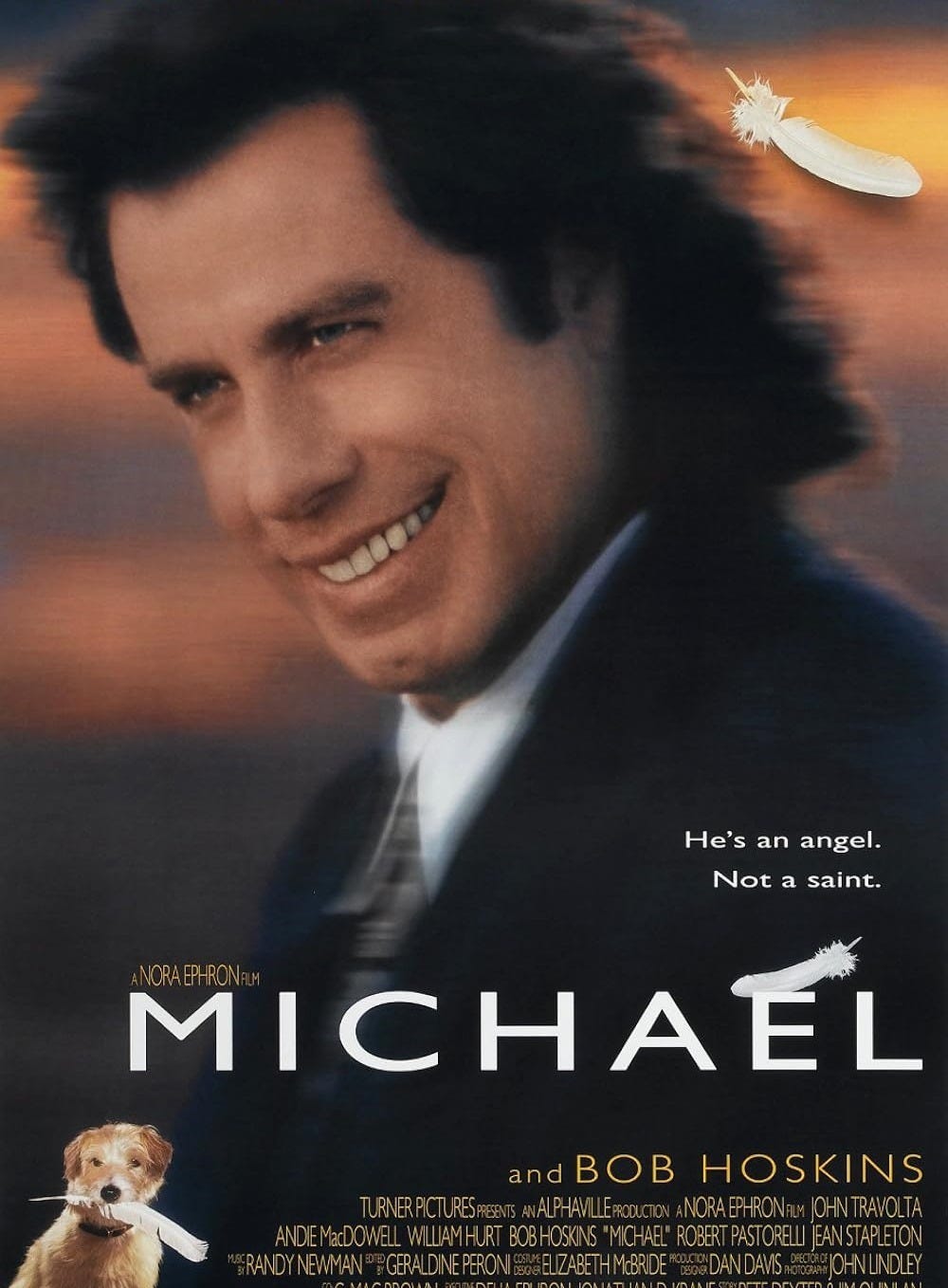
He was maybe forty-five, maybe fifty, with a long red ponytail and cut-off shirt. He looked vaguely musical—the proof of which arrived with bandmates texting him, confirming their upcoming gigs with the middle-aged grammar of men who believe saxophones, lizards, and lightning bolts communicate tone better than language.
When our resident Sammy Hagar wasn’t watching Antoine Fuqua’s 2026 Michael Jackson biopic on his iPhone, he was scrolling the New York Post, absorbing the typical newsfeed rot our brains easily repackage as outrage or concern.
Three days later, flying home to Los Angeles, I sat behind another gentleman of roughly the same age. This time, a family man, or at least he carried the exhausted hunch of one, as he chided his children—also hunched over iPads and Nintendos—when they failed to acknowledge a kindly flight attendant offering them novelty pilot wings.
He, meanwhile, also watched Michael.
We can hardly call this a coincidence: two middle-aged men watching the onboard entertainment’s feature film. Maybe both men wondered how the pop star of their youth would be portrayed. And perhaps less likely, they watched with similar reservations as I did—reservations that would keep me from clicking “Play” myself.
And yet these mundane observations struck me as a perfect example of how our culture now exercises judgment through consumption instead of deliberation.
Should it really matter whether engaging with Fuqua’s film preserves the financial and reputational legacy of Michael Jackson? Or is this an instance where it matters less where we draw the line than whether we draw one at all?
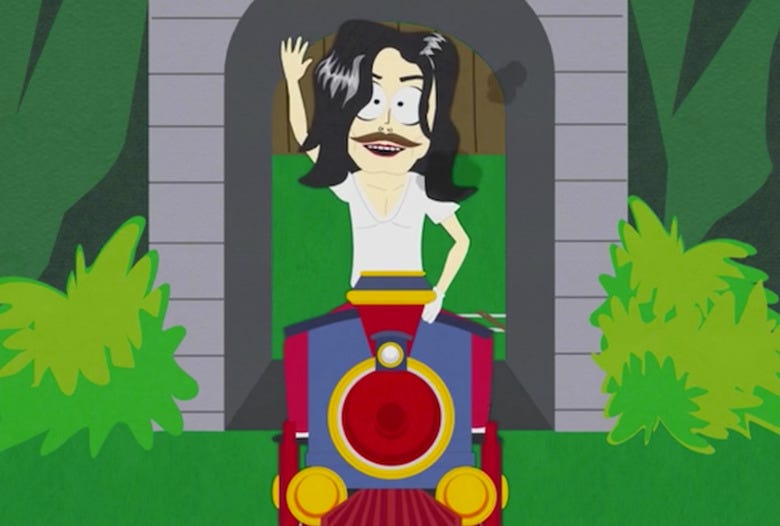
Here we have two men demographically inclined to beat the shit out of even alleged pedophiles, and yet both provided United Airlines with another view, validating their purchase and dissemination of a cleaned-up, estate-approved restoration project for a man whom, twenty years ago, most Americans believed guilty of child sex abuse.
In March 2005, before the criminal verdict, Gallup found that 75% of Americans believed the charges against Michael Jackson were definitely or probably true, while only 16% believed they were untrue. After the acquittal, Gallup found that more Americans disagreed with the not-guilty verdict than agreed with it.
At that moment, the country seemed capable of holding a simple and devastating suspicion: that the greatest entertainer alive may also have been a child predator. Which today, to be honest, feels like small potatoes when we consider that a large portion of the country (49% in a recent YouGov/Economist poll) believes its commander-in-chief was involved in Jeffrey Epstein’s sex crimes, many of which concerned minors.

This is not an essay about Michael Jackson so much as it is an exploration of our collective delusion that we can separate life from the patterns surrounding it. In Jackson’s case, there are too many allegations over too many years, surrounded by too much behavior no adult should condone.
The legal record remains one thing, but moral judgment is another. A society should be capable of understanding that a person can be acquitted and still not be innocent in the deeper civic sense.
Where a courtroom has rules, life has memory. And that memory appears to be failing us of late.
The film itself is not neutral. The Jackson estate was involved in the project, and unsurprisingly critics have described the result as a sanitized and selective treatment of his life.
Personally, I found it a big nothing burger. The plot was as empty as the expression Jaafar Jackson—Michael’s nephew—carries throughout his on-screen portrayal of uncle dearest.
It was, however, the perfect recipe for a fan. Fan, being short for fanatic.
Meanwhile, Wade Robson and James Safechuck, the two men featured in the Emmy-winning 2019 documentary Leaving Neverland, continue litigating claims against Jackson-associated companies, with trials now pushed to 2028.
That fact does not appear before the movie begins. Nor does the legal history, nor the ongoing financial interest of Jackson’s estate, nor the possibility that the very machinery now rehabilitating the man may be related to the machinery once accused of protecting him.
Thus, the weight of Jackson’s irregularity and documented megalomania arrives like everything else does now: as old content. Or, more specifically, one distant factoid lost in the nostalgia.
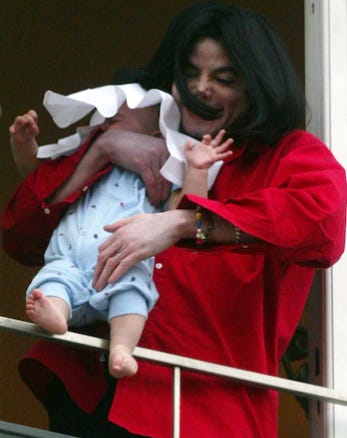
That, I think, is what has changed. Not that we no longer have morals, but we’d rather absorb moral judgment as entertainment. In other words, the same platforms that show us war crimes, baseball scores, child abuse allegations, recipes, campaign clips, celebrity deaths, and vacation photos are the same venues where we conceptualize reality.
We can no longer distinguish what we believe is sacred from what we believe is stupid. We only know how we feel about whatever presently dominates the cultural headlines.
This was not always the experience of humans, nor of the internet.
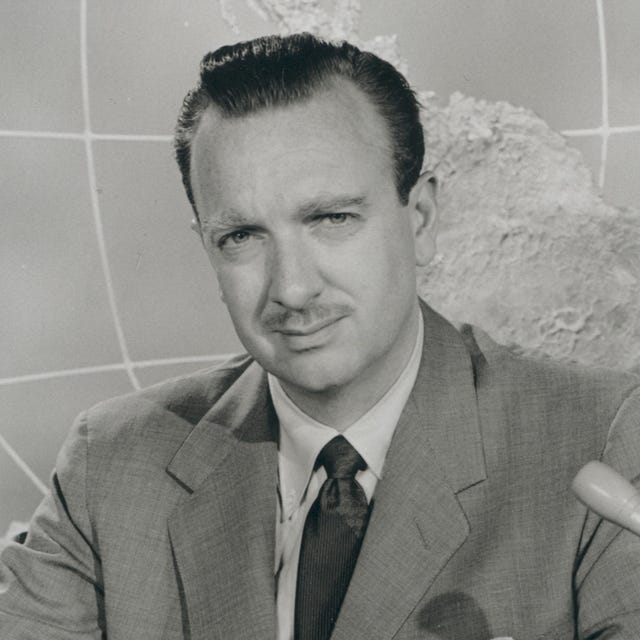
Fifty years ago, you went to Walter Cronkite for the news and your pastor for advice. And in the remaining cold, dead stretch of time between the ears, you reasoned out the rest, which developed personhood. Uniqueness. Nuance.
Even fifteen years ago, it wasn’t this bad. I had a smartphone in college and do not remember being conquered by it. The gadget was useful, sure, and the internet was a funny place to watch cat videos. But the world around me had weight. Bars felt like places to score. Classrooms were still places to learn. Bad ideas could sit in your head long enough to become either better or embarrassing.
Then, around 2017, faces shifted downward. Screen time skyrocketed. Politics became more gamified and combative. People seemed less persuaded by their neighbor than the slop reeling endlessly through their thumbs.
The internet and smartphones did not collapse social structures. That would be too easy. The stranger possibility is that advertisers learned, through the screen, how to interrupt the process by which experience becomes judgment.
Jonathan Haidt has argued that a major rewiring occurred during the smartphone and social media era, especially for young people, but the point here is not merely teen anxiety or Facebook ruining childhood. Attention itself—for all of us—became a market. And once attention became a market, morality became wholesale, too.
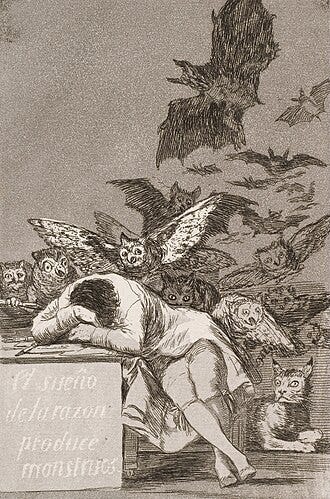
I felt a change in my family. My friends. Not just kids, but people—different people, hungry for a better life. Each found a platform, much like every platform found its appetite.
Twitter provided instant gratification and total immersion. Reddit allowed redundant gatekeeper councils to mask grievances as expertise. Instagram chiseled form by deception, training ordinary people to transform their faces and vacations into commercial products. Later, TikTok ended boredom, which is to say it ended the little pockets of nothingness where thought once began.
None of these appetites are new. Humans have always wanted status and certainty and satisfaction. What changed in the last ten years is that these appetites became environments. We no longer simply have vices; each vice has an interface.
The rise of these “feeds”—a name perfect in more ways than one—shaped us into creatures who thump Bibles on Sunday, vote for liable abusers on Tuesday, then enrich an alleged pedo estate on Friday.
This is not necessarily hypocrisy in the classic sense. Hypocrisy implies that a person knows their contradiction and hides it. What’s new is that the visible contradiction never has to resolve. How could it, since its arguments appear in separate windows, apps, and emotional systems?
Morality requires friction. It requires the capacity to say, “I know this is entertaining, but something about it is wrong.”
If you’re unable to trace the roots of an argument or a failing, you’re resolved to watch documentaries to form an opinion about Epstein. From there, it’s easy to claim that our institutions are failing children, and after patting ourselves on the back for noticing the rot, then, with no sense of contradiction, we watch a biopic and dance the moonwalk.
The distinction I keep returning to suggests that an inability to participate in morality leads us to consume it.
Participation costs something. To exercise morality, you may have to go extended periods without comfort or status. Whereas consumption costs nothing. It involves a currency we’ve been trained to spend without noticing: attention.
I will concede that “comments” are a form of participation—though perhaps it’s lowest. And I imagine this article’s will serve as a battlefield for those missing my point, chiefly Michael’s defenders. I know this because I have used comments as such an arena for a tangential purpose. More often than I’d like to admit, I find myself, after an unfulfilling day, typing away at some stranger with frantic urgency.
The topic hardly matters. Michael Jackson. Gaza. AI. Hitting reply sometimes feels like our only form of agency—albeit a counterfeit one.

Of course it doesn’t work in the end. The stranger opposite remains strange while the machine records our engagement. Still, the temptation surrounds us. But in a world where moral life arrives as content, commenting is the only form of participation resembling resistance.
Voting? Abstract. Institutions? Largely distrusted. Churches are either empty or insane. And, of course, you’ve lobbied since COVID for the work to stay at work so your family’s protected.
Right?
The comment section, therefore, remains the only place where you can meet your enemy—any enemy—in pitched battle.
The real world, the airplane, would never afford me such an awful opportunity.
It does no one good to ask: “Why are you watching that? Don’t you know you’re supporting someone highly likely to have been a serial child sex predator?”
Truly, these two men were not villains glorifying a sex offender. They were ordinary people killing time. And that made the scene more troubling, not less. A villain at least gives you something to oppose. Morality consumption only grants recognition. It requires no work.
In the end, no one has to be wicked, and no one has to defend Michael Jackson—they only have to watch.
Which is enough now.
We still have outrage. We have more outrage than any civilization in history. But we lack moral continuity: the ability to carry judgment from one context to another without letting convenience dissolve it.
And while it’s important we remember that a person’s name, image, and likeness are not separate simply because they are presented as such, more importantly, society doesn’t need a single moral framework. It needs the ability to restrain its appetite. Without it, everything is subject to rehabilitation, which ultimately means that nothing is sacred.