

The Republic of End-User Agreement

I spent an incredible amount of time this year asking myself, ‘Why?’
I knew my disaffection with our grifty, handheld world went deeper than its choosable skins—the phubbing, the death of place, the commodification of identity.
Being nonreligious and generally uncooperative, I don’t belong anywhere outside of reality, which, you can imagine, makes dealing in this world quite difficult.
New media forms in and of themselves are not the problem. Nor is social media itself, though its weaponization is at fault for extending our capacity to compromise in the name of connection.
Framed another way: would you approve of what this has all turned into, ten years ago? If you had known and had a vote, would you have wanted this?
Suppose a vote ‘no’ makes me a stodgy Luddite, wary of diving headlong into an unready world craving the rod of a billionaire.
After many nights hunting answers and expanding my horizons, I struck institutional bedrock tracing this agentic dilemma, digging clear into the Neolithic Age.
It’s the first place we find archaeological evidence of shared meaning among disparate human groups, which, to me, is much more important than writing (which comes six thousand years later), because it’s where we seed the idea of having something worth writing about.

Records far predate written stories, after all. Books, idea permanence—those have always been secondary to measuring the worth of our collective labors.
Preceding the written word, we have humans living in peaceful, multi-ethnic, mercantile societies. There are no major burn scars in the fossil record. There is no evidence of war. More importantly, there were no kings.
Law, as we conceptualize it, had no footprint. Yet pottery, fields, farms, villages show us undisputable evidence of order. Temples and sacrificial altars show elaborate ritual and collaborative construction—a societal resonance we could only dream about today.

But that’s the problem when you square it with today, where what we consume isn’t memorable, but white noise to drown out. A dying society has no resonance.
Technology advertised itself as that agentic change—the thing that would claw back some pastoral dignity from the grip of power and social rigidity. But what indelible mark will this '‘Information Age’ leave in the cosmos?
In fifty years, our descendants’ critiques will look past our ease and taste to see a people who failed to adapt, who chose to desecrate and devolve instead of making appends.
What does making appends mean? It means we add on, enumerate, orient society to coalesce around and distribute meaning carefully, transparently, and reflectively.
Sounds too good to be true, yada yada, I get that. Most philosophers, after all, are chasing a transcendence they can’t find because transcendence is perfect, and nothing’s perfect.
Well, almost. I’d say there’s a theoretical perfect.
Take the Fifth Amendment. Theoretically, it’s perfect. Among other things, it states that “[no person] shall be compelled to be a witness against himself”—essentially, no one has to testify and possibly incriminate themselves in a court of law, as a defendant or otherwise.
However, over time, Supreme Court decisions have morphed its meaning into two wildly different choices for someone planning their defense. Today, you either a) get on the stand and answer everything about the “topic” related to your alleged crime, or b) stay off the stand and say nothing at all.
The very agency implied by the First and Fifth Amendments—the idea that you can disbelieve the premise of a prosecutor’s question, that you can refuse to walk into their framing—is now null and void once you choose to testify while being charged with a crime.
That wasn’t always the case. But Supreme Court rulings in the ’50s (Rogers and Brown decisions) changed all that. Before, you could selectively answer what a prosecutor was asking you; now, once you open your mouth on a subject, the privilege is treated as waived on that terrain. Navigating the truth—what we ask every jury to do—was too much of a headache for appeals courts, apparently.
If you’re a defendant in a criminal trial, you’ve already got odds stacked against you. The State has resources, time, and a knowledge bank that far outstrips whatever public defender has been assigned to you if, God forbid, you’re not a multi-millionaire.
Now, naysayers may insist that for testimony to be considered “tested” and “viable,” it should hold up under cross-examination. Fine. But if we’re already implying that the defendant has a right to their version of the truth (given the First Amendment) and shouldn’t be compelled to stray from that (the Fifth Amendment), then this all-or-nothing model of waiver hollows those protections out.
The Supreme Court and other legal decisions have effectively decided that what the Founders “meant” was whatever would prove easiest for the appellate courts to administer.
And we’re supposed to comply. Gleefully. And call it order. Justice. Transcendence.
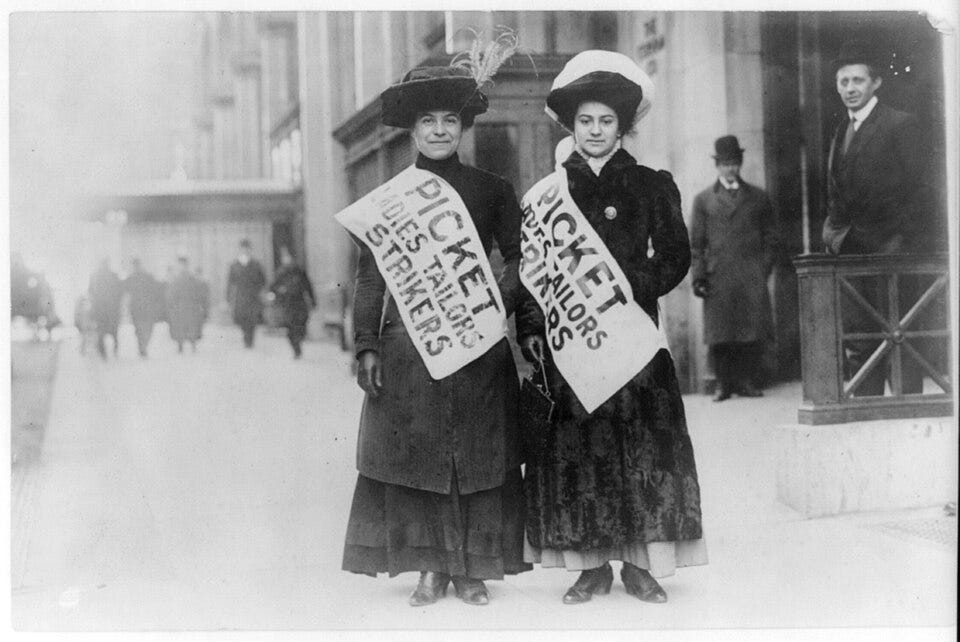
That gap between the text of a right and the way it’s administered is not an exception; it’s the template.
Today, obedience has become ambient. There is no need for force. Social and political systems no longer manufacture consensus—they simply continue, indifferent to whether their rituals are believed, so long as they are repeated.
The form persists, but the function and meaning have dissolved, leading to ethical inertness.

If the 20th century collapsed through violence, the 21st dissipates through euphemism. And in the absence of rupture, the subject does not rebel. They adapt. They perform. They persist inside systems that no longer return a signal. That persistence—mechanical, exhausted, and directionless—is the residue of collapse.
The defining characteristic of modern participation is not conviction, but compliance. You recite the pledge, cast the ballot, complete the onboarding module, file your taxes, submit the evaluation form—not because you believe in the process, but because opting out has been made illegible.
Social rituals have not disappeared; they have multiplied, becoming thinner and more procedural with each iteration. Their persistence is no longer proof of shared meaning, only of the inertia that keeps systems moving after the reason for their motion has been lost.

This is not a postmodern drift into irony—it is a structural entrenchment of performance. Institutions no longer expect belief; they require simulation. What once served as symbolic orientation now functions as user interface. You log in. You comply. You certify that you have read and understood.
No one verifies if you did. Everyone assumes you didn’t.