

The Good Ol' Days We Don't Remember
Why do we have more information than twenty years ago, but less of a capacity to use it?

These days, it feels strange speaking to young people when they’re not watching someone else play video games.
Most have no sense of how 9/11 upended our collective psyche, nor an understanding of what mass foreclosures did to the American family during the Great Recession.

Not to say young people are ignorant—most of them can recount the facts (or at least the vibes) well enough—but major events no longer function as reference points capable of orienting future goals.
Perhaps it’s the absence of such anchors that translates into polls showing Gen Z has a historically low belief in hard work leading to success, equally dismal trust in institutions, and abysmal confidence in the future.
But it’s not for lack of trying.
Gen Z participates in the labor market at a higher rate in the 18–24 cohort than their Millennial counterparts ever did, while posting comparable postsecondary education figures.
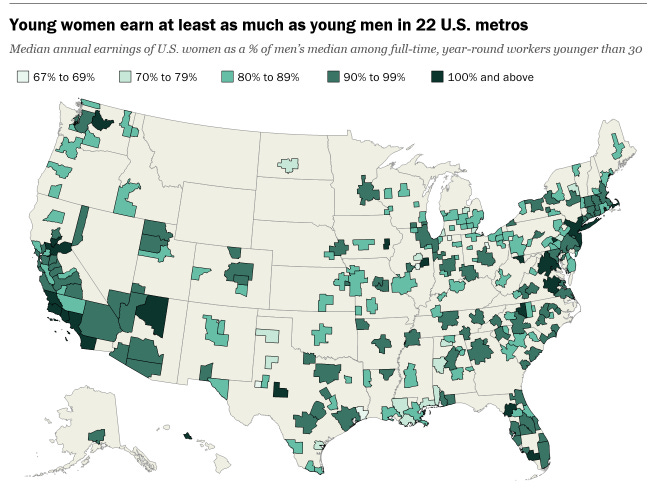
All this negativity despite women under 30 earning more money than their male counterparts in 22 of the largest U.S. metros!
But because there is no single shared cultural value—thanks to political turmoil, a war on truth, and the weaponization of the internet—this negative outlook is likely to persist, as young people today possess no directional memory.
What’s missing is not information, but a kind of collective experience that settles into the background of decision-making, and quietly shapes what feels possible, risky, or irresponsible.
I exclude COVID from this argument because of how its handling was so polarized and fragmented from the jump. Instead, I regard 2020-2021 as an extended period of unresolved extremes that resisted becoming a shared experience at every level.
For starters, a substantial portion of the country still denies that the immunocompromised and elderly experienced genuine horror, painting more than one million deaths as “fake news” or mere “natural causes.”
While on the other hand, a generation of germophobes still tries justifying the material harm they caused young, healthy people with prolonged shutdowns and the cancellation of in-person schooling.
We never integrated these realities into a shared account of tradeoffs or lessons, in part because we still argue over whether the virus emerged from a lab or a pangolin.
COVID remains vivid in our minds but comes nowhere close to functioning as shared memory because, in its wake, we skipped the slow work of interpretation and moved directly into identity.
It’s difficult to build consensus under these conditions because memory requires delay, digestion, and a willingness to sit with unresolved tension.
We argue endlessly about what happened, but rarely about how it should shape what comes next, which suggests the problem is not a lack of data, but an ethical failure.
Even now, it feels impossible to acknowledge both the necessity and the harm of certain policies without triggering ideological reflexes, as if any attempt at processing the experience threatens to collapse into caricature—Marxism on one side, Trumpism on the other—leaving no room for calibrated judgment.
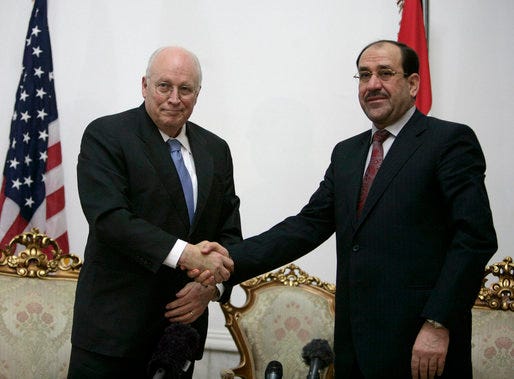
Imagine if 9/11 occurred in 2020—the cultural fallout would have been ten times worse. Partly because American cultural cohesion was stronger back then—but also because Dick Cheney-directed bombers moved quicker than our dial-up internet. Back in 2001, Americans didn’t know how truly medieval Saddam’s Iraq was, both culturally and technologically. Unlike today, when we know for a fact that less than 10% of our drugs come through Venezuela—but for some reason we’re not kidnapping leaders in Colombia, Mexico, and China.
Could it be because they don’t have 300 billion barrels of oil reserves?
Why do we have more information than twenty years ago, but less of a capacity to use it?
Before the widespread adoption of the internet on mobile devices, world events didn’t simply happen and pass; they accumulated. They created a sense of before and after that imposed friction on future action, forcing institutions and individuals alike to move with caution or humility, at least for a time.
Today, we seem unable to generate that kind of buildup. Experience flows through us without settling, leaving behind little more than opinion and posture. We lack not only foundational experiences held in common, but even a unifying theory of what those experiences meant or why they should still matter. Memory no longer stabilizes the present.
I suspect that Google, Meta, and the broader class of companies that profit from attention at an algorithmic level—as opposed to offering a mass-market product—play a central role in this erosion, not because they lie outright, but because they dismantle the conditions under which memory provides weight.
Today’s internet treats the past as a reservoir of fragments, each retrievable on demand, stripped of the temporal and emotional contexts that once gave them force.
History becomes something we consult rather than something that constrains us, a set of interchangeable excerpts rather than an accumulated structure we must move through. In this environment, memory loses its capacity to slow us down. It no longer delays action or introduces hesitation; it simply offers options.
What this reveals is a deeper difficulty we now face: our inability to allow memory to accumulate without immediately weaponizing or dissolving it. When every event is instantly searchable, instantly reframed and folded into a derivative narrative, nothing lingers long enough to matter.
Memory becomes shallow not because we don’t record the past, but because we refuse to let it slow us, irritate us, or demand patience. We move too quickly from experience to interpretation, leaving no space for the kind of reflection that once made history instructive rather than ornamental.
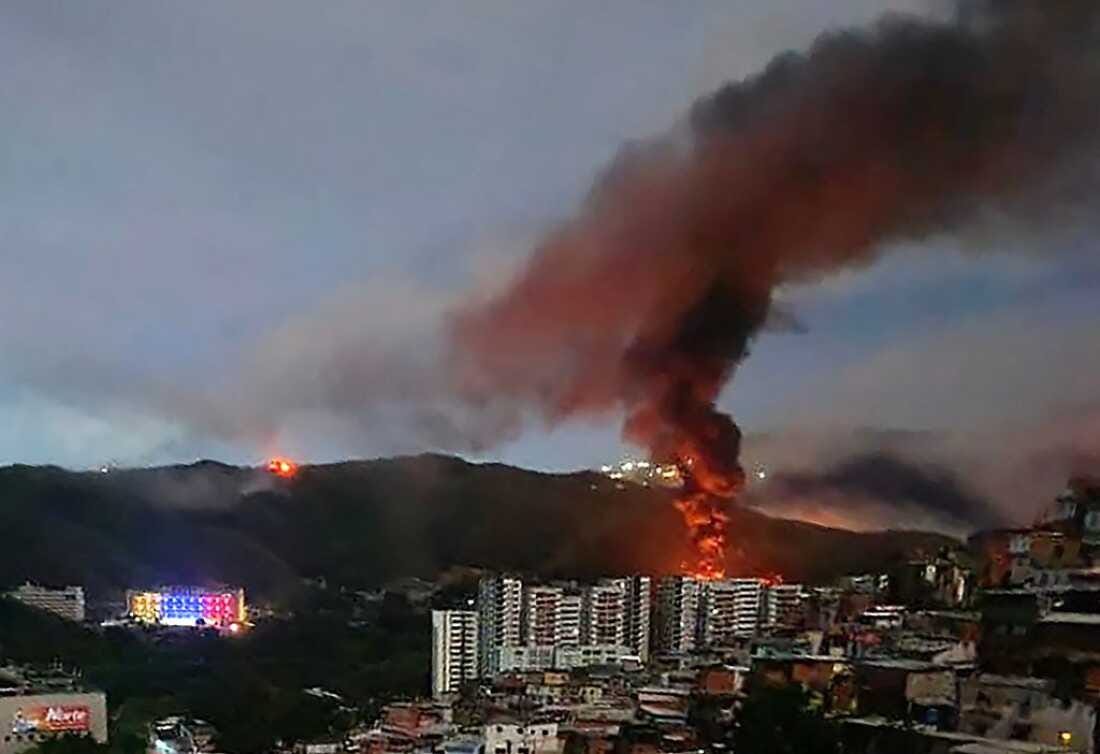
You can see this failure most clearly in the way we process contemporary geopolitics. Take the abduction of Nicolás Maduro under the familiar pretext of narco-trafficking, a justification so thin it barely bothers with plausibility when everyone involved understands the real stake is oil and regional leverage.
Memories of Iraq and Panama might exist, but do no work. In an ethically collapsing world, history neither delays action nor sharpens skepticism; it simply floats on as another reference swallowed by the feed.